

Fact Sheet: Building Soil Carbon and Resilience Through Ecosystem processes
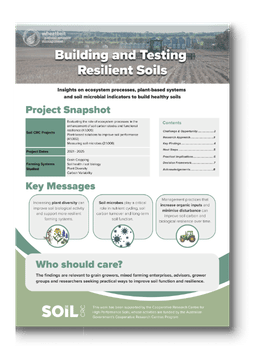
This Fact Sheet demonstrates the findings from three Soil CRC projects on how farming practices and natural ecosystem processes influence soil carbon, soil health and the ability of agricultural soils to withstand and recover from stress.
It includes sections on the Practical Implications and a Decision Support Framework to help land owners undertake a self assessment to adopt the trialed practices used in thee projects.
Researchers examined soils from different farming systems and management histories, testing how they responded to drought and compaction. The research explored the role of soil microbial communities and assessed practices including minimum tillage, cover cropping, lime application and the Bednar treatment.
The findings show that practices supporting healthy soil biology can improve soil function and resilience. Minimum tillage and cover cropping showed particularly consistent benefits, supporting microbial activity, nutrient availability and plant growth under stress.
This fact sheet summarises the project’s research, key findings and practical implications for building more resilient farming systems.
